


Huawei Nanjing Research Institute's Integrated Sensing and Communication Smart Campus Project Selected as WAA Excellent Case, Setting a New Benchmark for Industry Digital-Intelligent Transformation
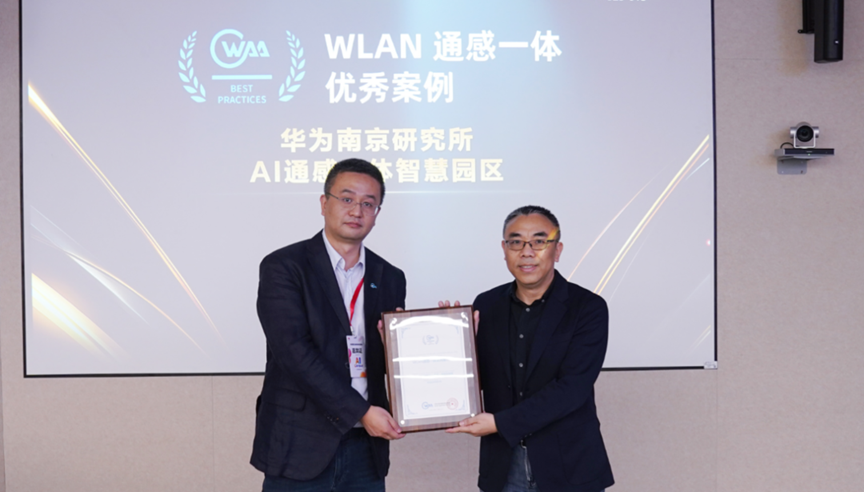
Figure1: WAA Presents the WLAN Integrated Sensing and Communication Excellent Case Certificate to Huawei
The "Digital-Intelligent Campus Innovation Practice Meetup", focused on network experience upgrades and intelligent innovation for office campuses, concluded successfully at Huawei's Nanjing Research Institute. Industry organizations, enterprise customers, and ecosystem partners gathered on-site for in-depth exchanges on new campus network technologies, architectures, and scenarios, and experienced a series of innovative implementations such as smart meeting rooms, inspection care, asset inventory, and AI navigation. Notably, the Huawei Nanjing Research Institute AI Integrated Sensing and Communication Smart Campus (hereafter referred to as "AI Digital-Intelligent NRI") was successfully selected as the "WLAN Integrated Sensing and Communication Excellent Case" by the World Wireless LAN Application Development Alliance (WAA).
Latest Network Technologies First Applied to Own Campus, Creating a "Replicable" Future Campus Model
In his speech, Zhao Shaoqi, President of the Campus Network Domain, Data Communication Product Line at Huawei, stated that Huawei consistently prioritizes applying the latest technologies to its own campuses, adhering to the practical spirit of "testing one's own parachute first" to create a benchmark model for the industry to reference. The "AI Digital-Intelligent NRI" project is precisely based on this philosophy. By integrating "Wi-Fi + Sensing" and "Wi-Fi + IoT" capabilities, it infuses powerful intelligence and visualization capabilities into the 10 Gigabit campus network, setting a new direction for digital-intelligent upgrades for industry customers.
WAA: Excellent Case Provides Demonstrative Value for Global Campus Network Construction
WAA Secretary-General Yang He pointed out that the alliance continuously promotes global WLAN industry innovation, supporting campus network construction through white papers and evaluation methodology systems. The emergence of cases like "AI Digital-Intelligent NRI" provides the industry with a high-quality reference model that can be promoted top-down, accelerating the large-scale application of integrated sensing and communication technology in smart campuses.
Deep Integration with Business Scenarios, Driving Campuses Towards "Fully Digital, Fully Perceptive, Fully Intelligent"
In a keynote speech, Lu Xin, Vice President of Huawei's IT Platform Service Department, shared the construction philosophy of "AI Digital-Intelligent NRI". Centered around typical scenarios like office work, access, inspection, and security, the project leverages Huawei's Galaxy AI 10 Gigabit Campus Network and HIS Digital Operating System. Through digital element aggregation, AI governance, and scenario-based applications, it achieves a comprehensive improvement in employee office experience and enables more efficient, real-time intelligent operational capabilities for the campus.
Chen Jiefu from the Shanghai Institute of Architectural Design & Research also shared his experience in intelligent building renovation for urban structures. He mentioned that in the Shanghai Design Mansion project, Huawei's 10 Gigabit Campus Office Network Solution was adopted. The All-Optical Ethernet architecture and Wi-Fi 7 Integrated Sensing and Communication technology together built a stable wireless foundation, enabling the building to achieve a genuine digital advancement.
AI-Driven Network Evolution, Achieving "Dual Upgrade" in Operations and Experience
Chen Yongxing, Vice President of the Campus Network Domain, Data Communication Product Line at Huawei, emphasized that the introduction of AI has significantly enhanced campus network security, application performance, wireless experience, and operational management. Huawei aims to create a campus network foundation characterized by high stability, high intelligence, and high operational efficiency for its customers through deep synergy between technology and business.
The "Tiangang Laboratory" open house on the day allowed attendees to deeply experience the real-world application results of integrated sensing and communication capabilities in office scenarios. For example, using CSI sensing technology to enable smart meeting room features like "lights on when people enter, off when they leave" and "automatic release when unoccupied"; achieving precise security inspections at night by sensing human figures; enabling automatic asset inventory in warehouses, significantly reducing loss probability; realizing visual, self-optimizing, and intelligent diagnosis full-process operations through iMaster NCE and the AI Network Agent; and the AI navigation function enabling meter-level precise location of office resources, bringing great convenience to large-campus work.
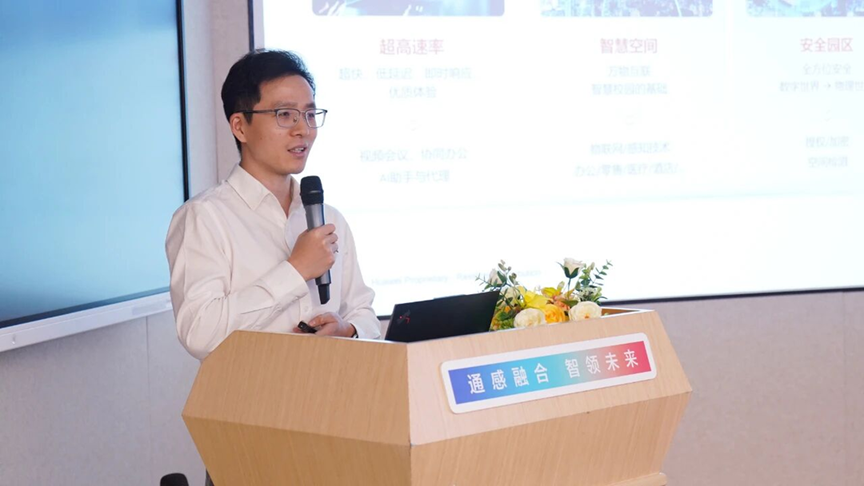
Figure2 Chen Yongxing, Vice President of the Campus Network Domain, Data Communication Product Line at Huawei
This series of achievements not only demonstrates the maturity and replicability of integrated sensing and communication technology but also reflects the crucial transition of campus networks from "connectivity" to "intelligence".
Looking Forward: O2072PM Empowers More Smart Campus Devices Towards Wi-Fi 7
As campus networks rapidly evolve from "high-bandwidth" to "intelligent sensing" and "multi-service integration", various terminal devices are also moving towards higher performance, lower latency, and stronger sensing capabilities. In response to this trend, QOGRISYS introduces the O2072PM Tri-Band Wi-Fi 7 + Bluetooth 6.0 Module, providing more flexible and powerful wireless foundational capabilities for the new generation of smart campus terminals.
The O2072PM adopts a tri-band architecture and supports key Wi-Fi 7 features such as 320MHz bandwidth, eMLSR multi-link operation, 4K QAM, and CSI sensing. It can deliver more stable and controllable connection experiences in high-density offices, smart inspection terminals, indoor positioning devices, and general IoT equipment. Its compact package design allows various campus terminals to integrate Wi-Fi 7 capability with lightweight design, accelerating the large-scale deployment of "smart scenarios + wireless sensing" technology and bringing higher value to smart campus construction


